

 Pristupačnost
As part of the "Fieldwork 1 and 2" courses, third- and fourth-year students of Demography and Croatian Emigration visited Bosnia and Herzegovina from May 14 to 17, 2026, accompanied by instructor Tamara Bodor and lecturers Ivan Nađ and Borna Mažar.
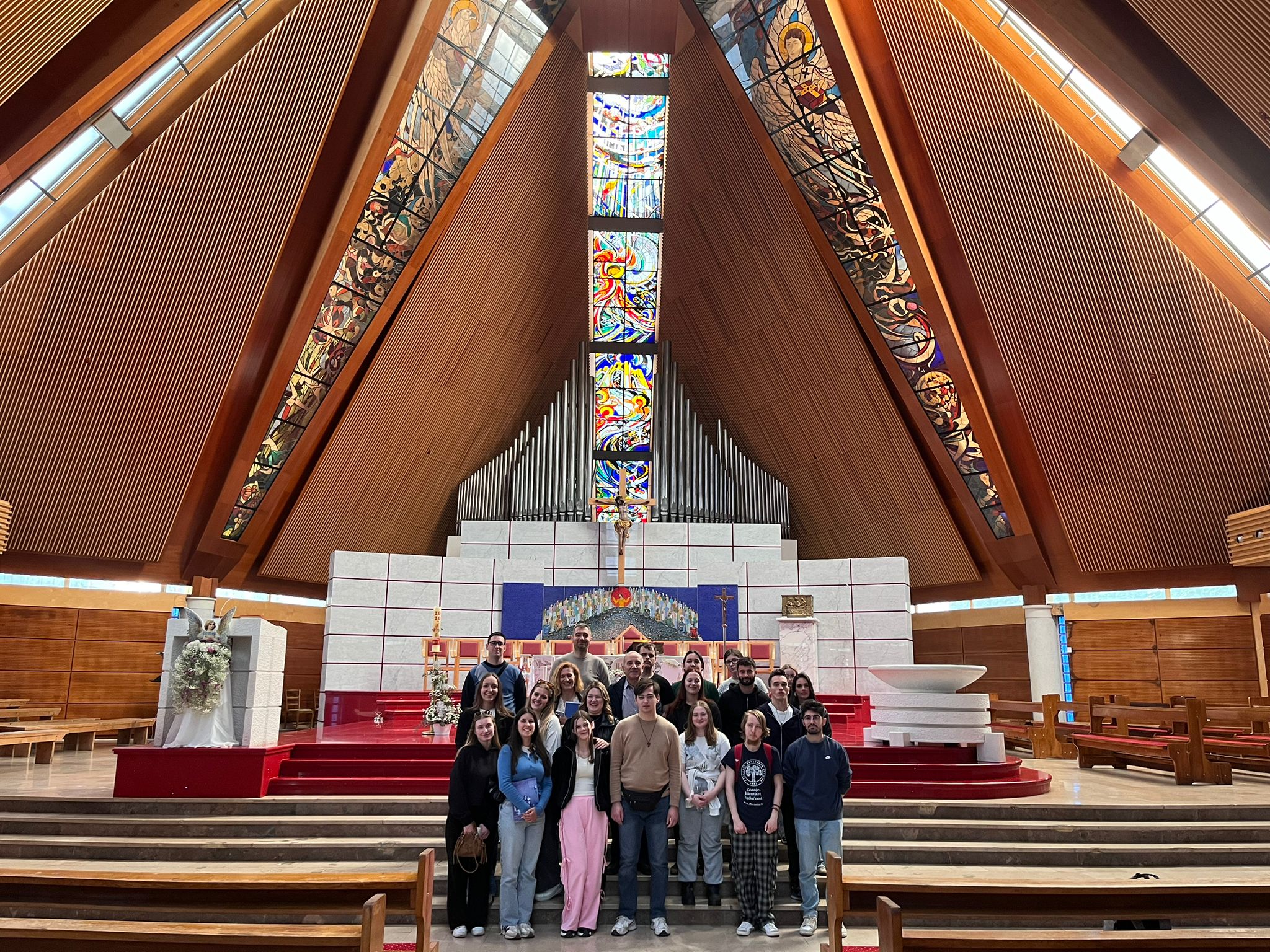
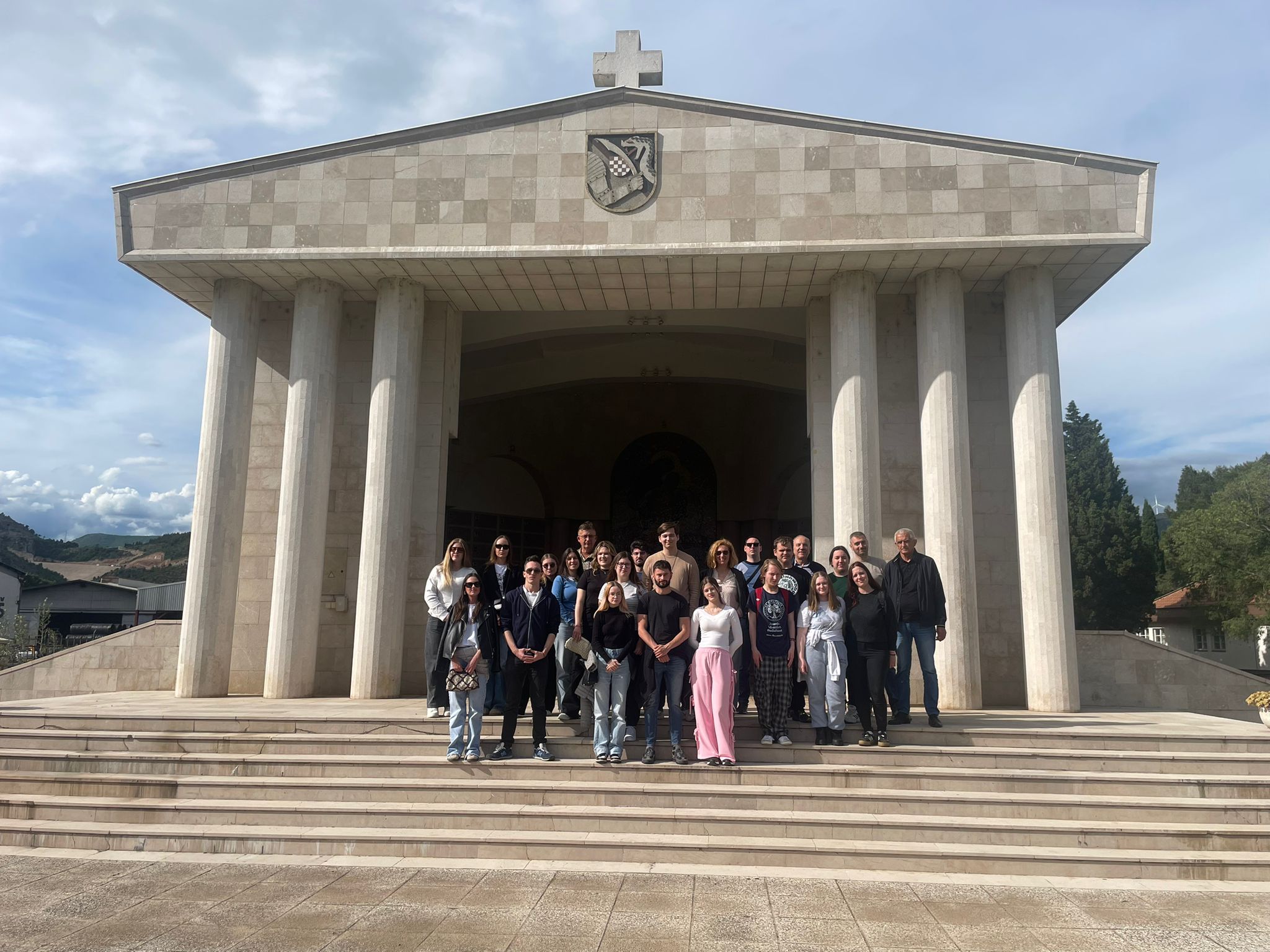
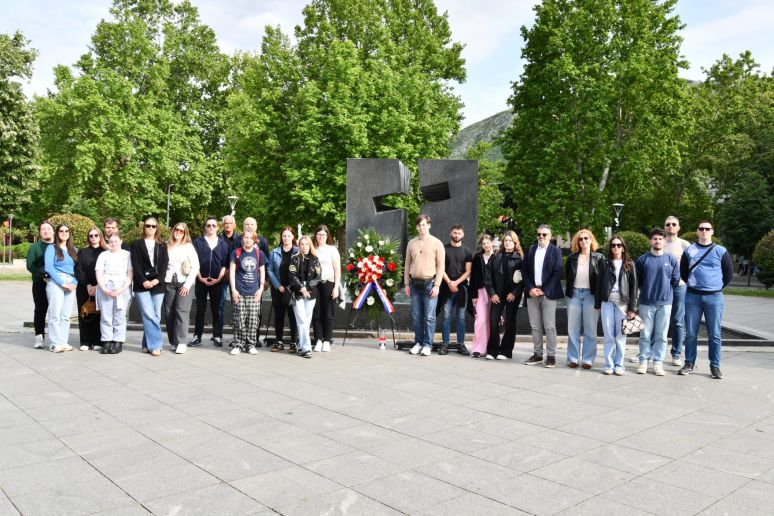
The students spent the first day of their fieldwork in Mostar, where they experienced the city’s rich cultural, historical, and spiritual heritage. They visited the votive chapel of the 2nd Guards Brigade, laid a wreath at the monument to those who fell during the Homeland War, and visited the "Herceg Stjepan Kosača" Croatian Home. Guided by a representative from the Association of Volunteers and Veterans of the Homeland War (HR H-B Mostar branch), the students toured the Museum of the Mostar-Duvno Diocese, the Cathedral of the Blessed Virgin Mary (Queen of Heaven and Mother of the Church), and the Franciscan Church and Monastery of Saints Peter and Paul. The latter houses a library that has survived three wars and contains the oldest copy of the Bible in Herzegovina.
On the second day of the fieldwork in Mostar, the students were hosted by the University of Mostar—specifically the Faculty of Humanities and Social Sciences. They were shown around by Vice-Dean for International Cooperation Dr. Jelena Jurčić and Associate Professor Dr. Mirjana Miličević, who also teaches the course "Croats in Bosnia and Herzegovina" at the Faculty of Croatian Studies. The students had the opportunity to learn about the work of the Faculty of Humanities and Social Sciences, as well as the University of Mostar’s television station, after which they toured the "Pod Bijelim Brijegom" stadium, home to HŠK Zrinjski Mostar. The students visited the "Cemetery of Peace" (Groblje mira) at Bile, where they paid tribute to all victims of the Second World War and the post-war period by lighting candles in their memory. In the afternoon, the students departed for Travnik and checked into the "Petar Barbarić" Croatian Catholic Center.
On the third day of the field trip, accompanied by guides from the Association of Holders of War Decorations of the Croatian Defence Council (HVO) of Herceg-Bosna (Central Bosnia Canton), the students visited the Galica-Vlašić memorial site in the Municipality of Travnik—the location where the Army of Republika Srpska committed a crime against 14 captured HVO defenders from Travnik. They subsequently visited the Prahulje cemetery memorial site, also in the Municipality of Travnik. This site is significant because, while it contained no graves in 1992, it now serves as the final resting place for the majority of the fallen HVO defenders from Travnik; following the Vukovar Memorial Cemetery, it holds the largest number of buried defenders from the Homeland War. In the afternoon, the students visited the memorial site at Križančevo Selo in Vitez. At this location, soldiers from Muslim forces and the Mujahideen units within the Army of Bosnia and Herzegovina committed a crime against 74 Croatian defenders and civilians—an event known as "Bloody Christmas Eve" (Krvavi Badnjak). The final memorial site visited by the students was "Osmica" in Vitez. There, they paid tribute to the victims by lighting candles in memory of June 10, 1993—a day when Muslim forces from the Army of the Republic of Bosnia and Herzegovina (ARBiH) fired an artillery shell onto a basketball court where children were playing, resulting in the deaths of eight of them. To conclude the program on the third day of the field trip, the students visited the "Birth House of Nobel Laureate Ivo Andrić" Memorial Museum.
On the morning of the fourth day, the students visited the Franciscan Monastery and the Church of St. Francis of Assisi in Guča Gora. Within the complex lies a newly renovated Franciscan museum, which offers visitors an insight into the history, art, and traditions of the region. Afterward, they visited the wartime hospital located within the Church of the Holy Spirit in the Nova Bila parish. Established in 1992 by defenders and Franciscan friars, this hospital served as a beacon of hope for approximately one hundred thousand Croats during the Homeland War.
The field trip helped strengthen cooperation and ties between the Croats of Bosnia and Herzegovina and the Faculty of Croatian Studies, while also allowing students to deepen their understanding of the historical, social, and cultural circumstances of the Croatian people in Bosnia and Herzegovina. By engaging directly with the local community, institutions, and sites of special significance, the students gained invaluable experience and new insights; they will surely remember this journey for its many fond memories, sense of togetherness, and meaningful life experiences.