

 Pristupačnost
The Department of Sociology was established in 1992 and is one of the core disciplines of the Faculty of Croatian Studies. The concept of sociology studies focuses on the application of sociological theories and social science methodology for understanding social processes and phenomena in the specific context of Croatian society and comparatively in a European and global perspective. The study of sociology aims to train highly qualified sociological research personnel with professional research and analytical skills necessary for productive work in the public and private sectors. The sociology program at the bachelor's and master's levels is organized according to current international scientific standards.
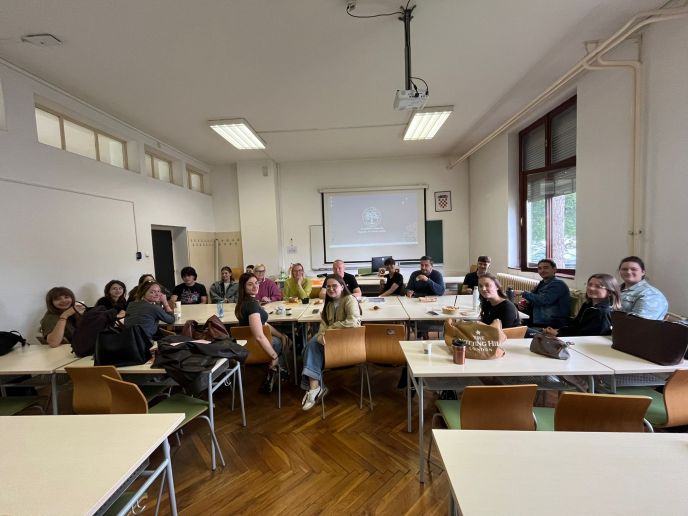
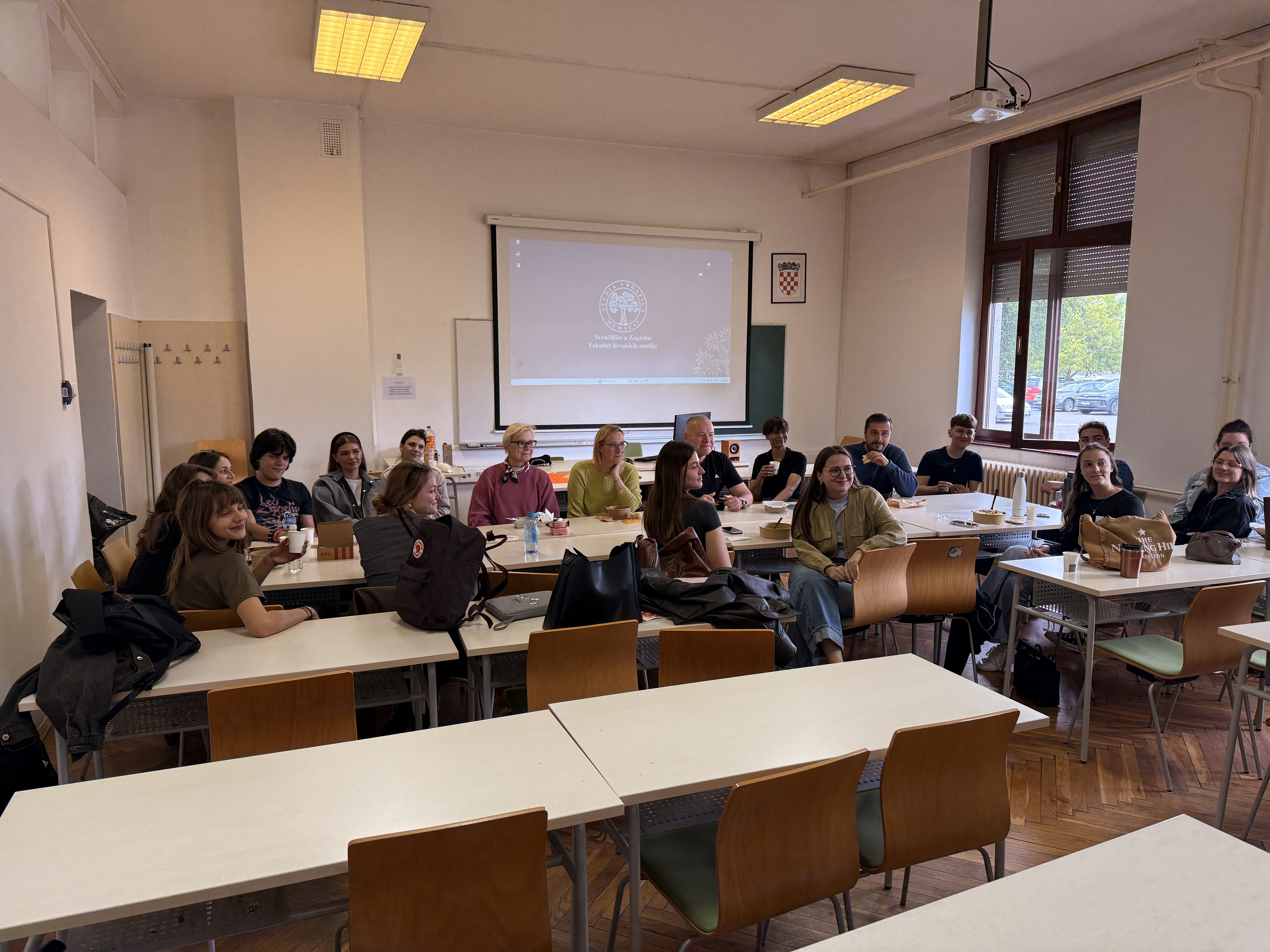
On Thursday, May 14, a traditional joint lunch of students and professors was held as part of the Sociology of Food course. The activity was intended for second-year undergraduate sociology students, with the aim of connecting theoretical knowledge with everyday practical experience.
This practice continues this year following last year’s joint lunch, which was organized at the Student Centre restaurant on the Borongaj University Campus, further establishing it as a valuable part of the teaching process.
This year’s gathering also had a specific feature – students decided to organize the lunch using food delivery, opening up space for reflection on contemporary eating habits and their social implications.
In addition to the course instructor, Associate Professor Marica Marinović Golubić, the lunch was attended by other members of the Department of Sociology: Head of Department Professor Irena Cajner Mraović, Professor Renato Matić, Associate Professor Dario Pavić, Assistant Professor Erik Brezovec, and Marija Zelić, PhD.
As emphasized by Associate Professor Marica Marinović Golubić, the aim of such gatherings is to bring students closer to the sociological perspective on food:
“It is important for us to show that a meal is not merely the satisfaction of a biological need, but also a social event. Through shared dining, students can directly experience what we discuss in class – that the table is a place of socialization, exchange of ideas, and relationship-building,” Marinović Golubić stated.
At the same time, such informal gatherings contribute to better mutual acquaintance and the creation of a more relaxed academic environment, where traditional hierarchical boundaries are softened.
Students particularly emphasized the value of this experience. Petra, a second-year sociology student, highlighted that the entire gathering was extremely pleasant and motivating, noting that conversations with professors in a relaxed and friendly atmosphere helped bring students closer to their future profession.
A similar impression was shared by student Ana, who admitted she was surprised by the atmosphere of the event:
“Professors treated us as equal colleagues, which was a particularly meaningful experience for me,” Ana said, adding that this form of practical teaching clearly demonstrated that dining is not merely about fulfilling a basic need, but also an important social ritual.
As she pointed out, the shared lunch enabled the exchange of ideas, better mutual understanding, and a sense of connection, thereby reinforcing the sociological dimension of food discussed in the course.
The Sociology of Food course, offered as an elective in the second year of the undergraduate sociology program, provides students with insight into key sociological concepts related to food and eating habits. During the course, students reflect on the social importance of food, analyze norms of acceptable and unacceptable consumption, and explore customs and practices associated with eating in different social contexts. Particular emphasis is placed on raising awareness of social inequalities in access to food, as well as on recognizing contemporary risks and challenges related to nutrition, including eating disorders.
The joint lunch once again confirmed that theoretical knowledge in sociology can be successfully connected with practice, creating space for stronger relationships and a deeper understanding of social phenomena.