


 Pristupačnost
The Department of Sociology was established in 1992 and is one of the core disciplines of the Faculty of Croatian Studies. The concept of sociology studies focuses on the application of sociological theories and social science methodology for understanding social processes and phenomena in the specific context of Croatian society and comparatively in a European and global perspective. The study of sociology aims to train highly qualified sociological research personnel with professional research and analytical skills necessary for productive work in the public and private sectors. The sociology program at the bachelor's and master's levels is organized according to current international scientific standards.
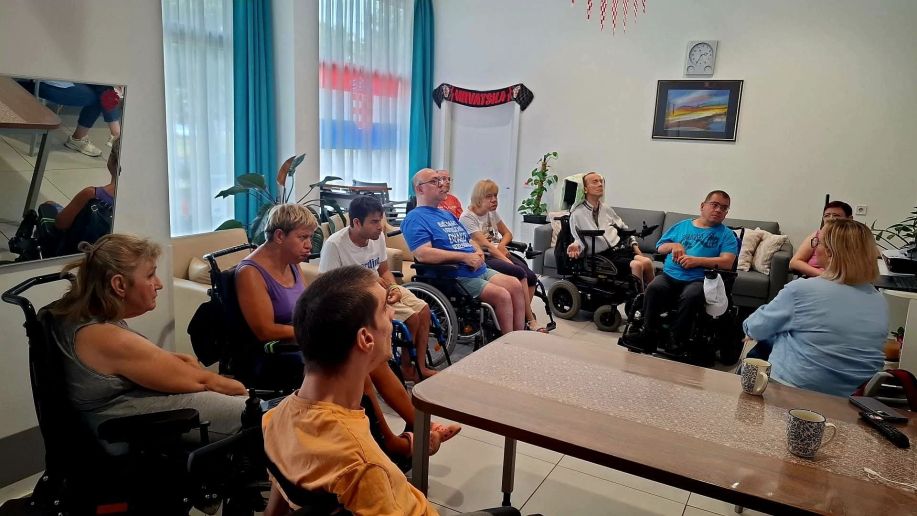
Photo: Zagreb Centre for Independent Living
On Wednesday, 8 July, the third educational workshop was held at the Zagreb Centre for Independent Living as part of the institutional project "Dimensions of Digital Inclusion and Exclusion in Croatian Society (DIGI-HR)", implemented by the Faculty of Croatian Studies, University of Zagreb. The project's activities are aimed at strengthening the digital competences of the Centre's users, enabling them to participate more safely, independently and actively in the digital society.
The workshop on digital etiquette, focusing on how to communicate politely, responsibly and safely in the digital environment, was delivered by Assistant Professor Ana Marija Dunaj, PhD, from the Department of Sociology at the Faculty of Croatian Studies.
As with the previous workshops, participants showed great interest in the topic, actively engaged in discussions, asked numerous questions, and shared their own experiences of communicating via e-mail, social media platforms and messaging applications.
During the workshop, participants were introduced to the fundamental principles of digital etiquette and the importance of respectful and responsible online communication. Particular emphasis was placed on communication by e-mail, the importance of replying to received messages, proper e-mail writing, and appropriate behaviour on social media and messaging platforms.
Participants were introduced to the principle that every message deserves a reply, whether it is an e-mail, WhatsApp or Viber message. Even a brief response such as "Thank you for your message" or "I will get back to you tomorrow" demonstrates respect, responsibility and reliability in communication. It was also explained that when feeling angry or upset, it is best to wait before replying so that communication remains calm and constructive.
Through practical examples, participants explored topics including privacy protection, responsible sharing of photographs, respect for copyright, appropriate communication in digital environments, and the importance of maintaining a positive digital footprint. They also learned about the proper use of photographs available online, with particular emphasis on respecting copyright. The workshop additionally addressed the responsible use of artificial intelligence as a writing aid, highlighting that the final responsibility for any content always remains with the user.
One of the most engaging parts of the workshop was the interactive discussion on everyday situations in digital communication. Using real-life examples, participants examined appropriate ways of responding to inappropriate comments, messages and other challenges commonly encountered online. The discussion also covered appropriate behaviour in group chats and video calls, as well as the importance of mutual respect, non-violent communication and responsible behaviour in digital spaces. Assistant Professor Dunaj concluded the workshop by presenting the Ten Golden Rules of Digital Etiquette, reminding participants that courtesy, respect and responsibility are just as important online as they are in everyday life.
The DIGI-HR project will continue with a new series of workshops in September, promoting digital literacy, strengthening digital competences and reducing digital exclusion among vulnerable groups through practical, user-oriented educational activities.